Wellness and Health: Intergenerational Protection and Life Reshaping in the Modern Context
The term “health and wellness,” though brief, encapsulates the core family issues of contemporary society. Literally, it combines “health” and “elderly care,” or intertwines “rehabilitation” and “nurturing.” However, deeper research reveals that health and wellness is essentially a social transformation concerning “dignity” and “adaptation.”
In traditional Eastern culture, we value “filial piety,” emphasizing children’s close care for their parents and regular morning and evening greetings. However, with the acceleration of global modernization, this traditional model of physical closeness is facing unprecedented challenges in both the East and the West. The fast pace of modern professional life and the separation of living spaces make it difficult for even the most filial children to provide 24-hour close care. This increase in “physical distance” is an inevitable consequence of the changing times, but it has also become a shared anxiety for many elderly people and their children.
In Western societies, although cultural backgrounds differ and elder care tends to be more community-based and supported by social systems, how seniors can maintain independence, autonomy, and quality of life in their later years remains an unsolved problem in specific social contexts.
In this “Health and Wellness” section, we aim to explore how, given the current situation where children cannot be “close” to their parents at all times, we can use scientific methodologies, minor modifications to the home environment, and intelligent assistance methods to build a safe, dignified, and energetic self-sustaining living system for the elderly.
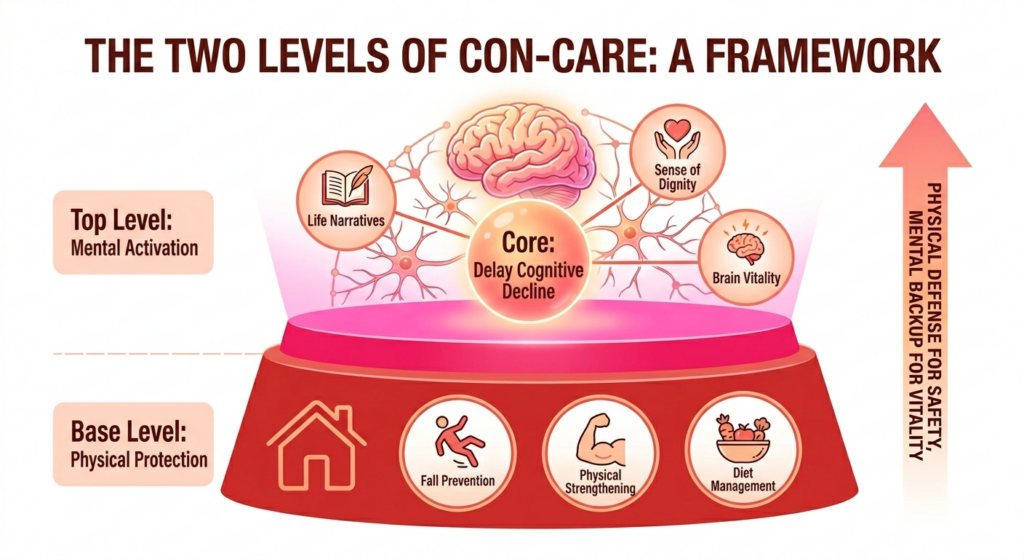
Elderly care is not about passively waiting for care, but about proactively embracing empowerment. It empowers seniors to feel in control and allows their children, amidst the hustle and bustle of modern life, to find a more scientific and profound way to love and protect them.
What we need is a ‘life narrative’: This is one of the essences of wellness: it’s no longer about ‘managing’ a dying body, but about ‘maintaining’ a precious database of the soul—how to live with dignity and embody the dignity of life.
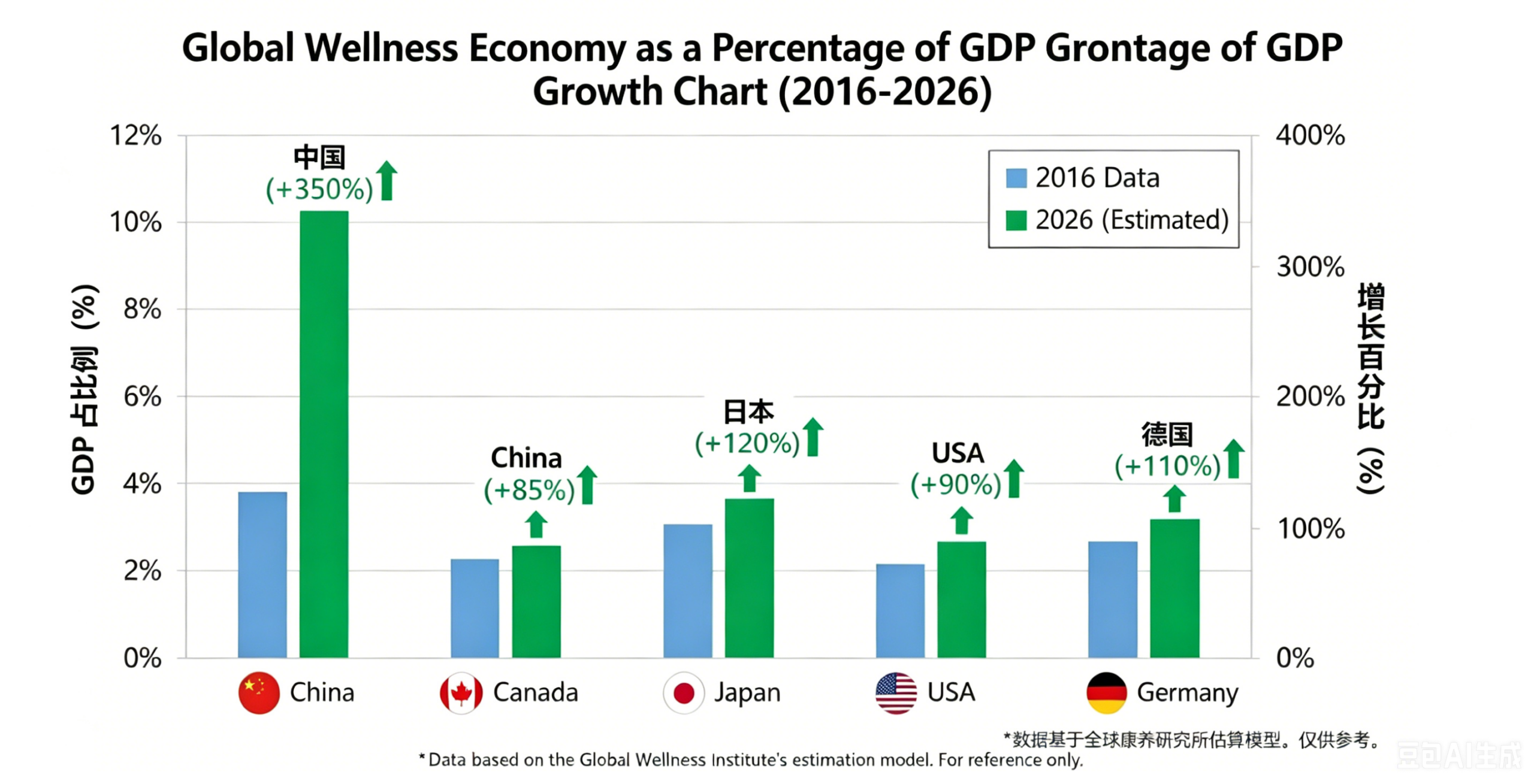
1. Overall Interpretation of the Chart: Global “Safeguarding”
These pillars represent the various national governments and civil society organizations.Medical care, home-based elderly care renovation, long-term care and elderly healthTotal investment.
- Common pointsWhether in Canada, the United States, or Japan, the proportion of investment is increasing. This indicates that as humans live longer, how to “live well” has become the most expensive project globally.
- The essence of investmentThis money wasn’t squandered; instead, it was used to build a community center near our home, motion-sensor lights in our house, elevators in the stairwell, and various smart monitoring devices.
2. Why does China’s proportion appear to be “surging out of the competition”?
The green column in China, exceeding 10%, might prompt exclamations like “China is so rich!” or “China is so powerful!” As a research center, we must explain the reasons from a scientific perspective:
- The “multiplier effect” of population sizeChina has nearly 300 million elderly people. This means that even if the government only provides each elderly person with a little more basic support (such as an extra physical examination per year or a subsidy for a non-slip handrail), multiplied by the huge number of 140 million families, the total investment will instantly become an astronomical figure.
- “Catch-up” growthChina’s GDP is enormous, but its foundation in elderly care has been relatively weak in the past. The current explosive growth is essentially a process of “catching up”—shifting the elderly care facilities and medical insurance system for over a billion people from the traditional model to a modern one in a very short period. This “infrastructure-style” investment will naturally increase its share of GDP.
- Not just powerful, but also challenging.A high proportion does not equate to per capita welfare exceeding that of developed countries. We want to objectively tell you that precisely because of the large population and high pressure, China must invest a higher proportion of funds than other countries to maintain the basic pension standard for this massive society.
3. Comparison with local Canadian practices
- Characteristics of CanadaWhile Canada’s percentage of people with limited resources (around 7-8%) isn’t as high as China’s, its advantage lies in its higher per capita resources.and“The system is mature.” Because Canada has a smaller population, investments can be made more precisely, enabling more home-based and personalized services.
- Different paths lead to the same goalChina is addressing its large population base by investing heavily, while Canada is addressing its high-quality development by investing steadily.
📌 1: Home Self-Circulation
Today, we’ll deconstruct the underlying logic of “elderly care”: In a world where children can’t provide 24/7 physical and attentive care, how can we, in Canada, utilize scientific methods, subtle home modifications, and smart technology to build a safe, dignified, and vibrant “self-sustaining living system” for seniors? Today, we aim to help seniors regain control of their lives at home!
📌 2: A societal pain point—the hidden pain of physical distance
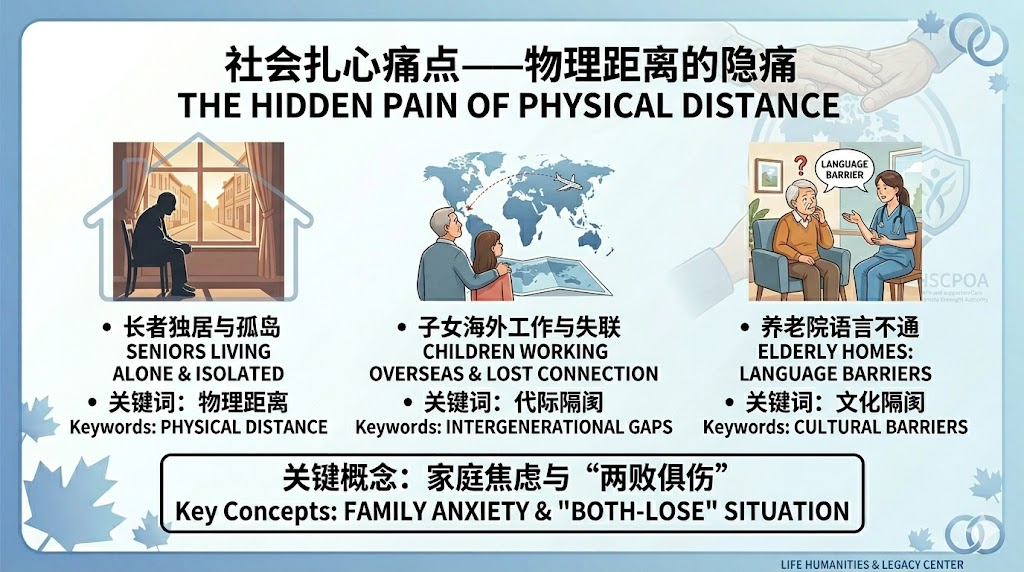
Children have to work and raise their own children; even the most filial child can’t be physically present 24/7. Not to mention the isolation faced by elderly Chinese people overseas, including language barriers and cultural differences. Some children believe that sending their parents to high-end nursing homes is filial piety, but the elderly often can’t speak a word of English and feel like they’re in prison. This physical and psychological distance has become a hidden pain that many families dare not touch. Does ‘filial piety’ in modern society inevitably become a lose-lose situation of anxiety? The answer is: No.
📌 3: Core Concept Subversion – What is True “Health and Wellness”?
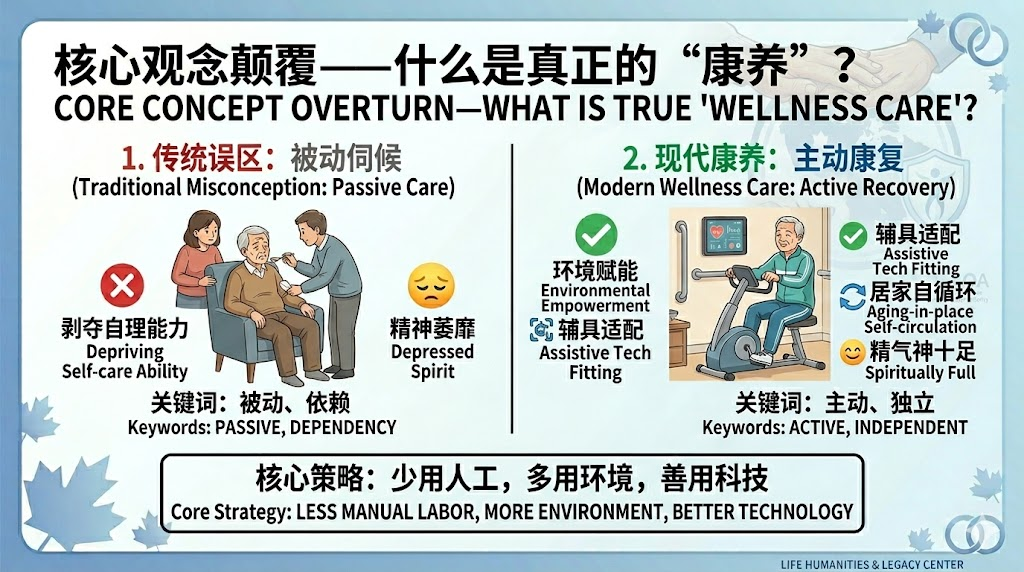
Many people consider it filial piety to pamper the elderly until they are completely immobile, feeding them and dressing them. I tell you, in modern geriatrics, this is not filial piety; it’s depriving the elderly of their dignity! Once a person feels useless and needs help for everything, their spirit and vitality completely collapse. True well-being is not about passively waiting for care, but a self-sustaining cycle of dignity and self-adaptation. Our core strategy is:Use less manpower, make more use of the environment, and make good use of technology.We need to make the elderly feel, “I can still manage on my own!” That’s the highest respect we can show for life.
📌 4: The first core section – a “reductionist” transformation of the home environment
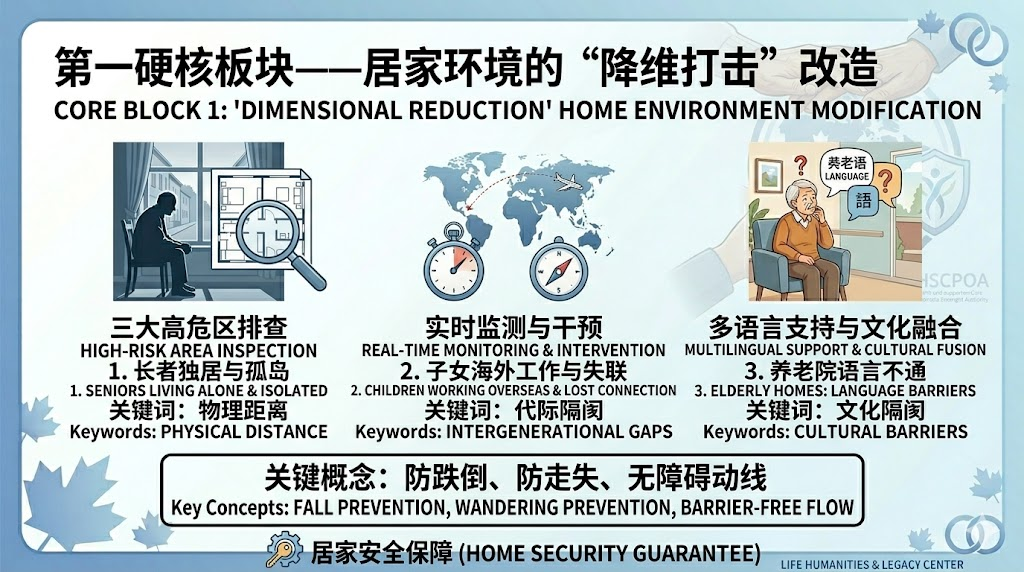
“Since the goal is to enable seniors to achieve self-sustaining living at home, the first step is to transform their homes into ‘absolutely safe havens.’ What is the number one killer of the elderly? Falls. One fall could mean never getting back up. The first project our research center proposed is ‘micro-renovation of the home environment.’ We need to conduct a 360-degree inspection of the three high-risk areas: the bathroom, the bedside, and the kitchen. This doesn’t mean spending a fortune on renovations, but rather making ‘fine-tuning’ adjustments. For example: converting bathtubs to walk-in, installing ergonomic safety grab bars next to the toilet, applying seamless anti-slip treatment throughout the house, and installing smart nightlights. By optimizing the elderly’s living patterns, we aim to ‘reduce the risk of falls and getting lost’ through environmental improvements, eliminating the risk before it even occurs.”
📌 5: The second core section – Safeguarding behavioral dignity with “technology assistive devices”
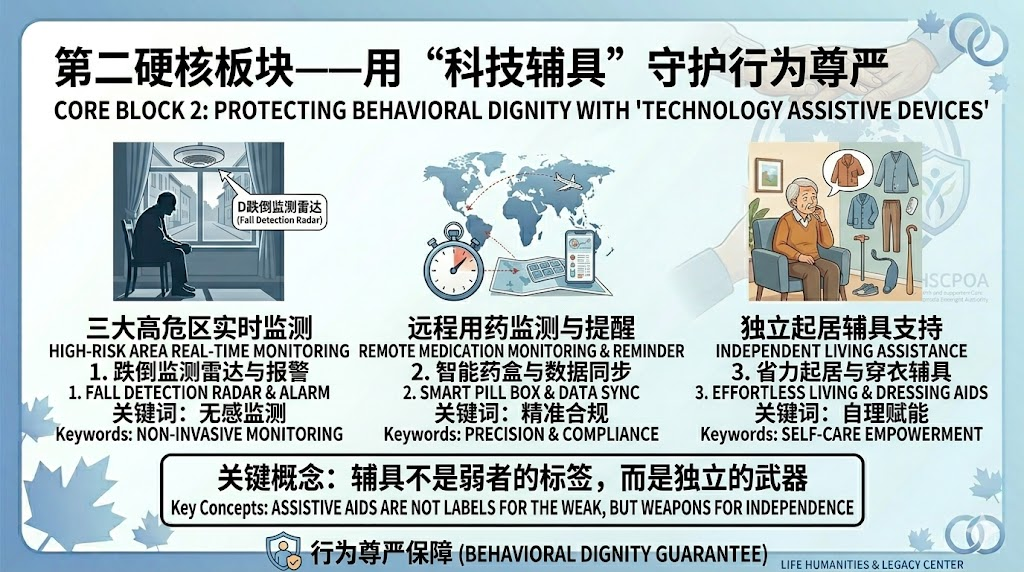
“With a safe environment in place, the second step is to address the elderly’s daily mobility needs. Many seniors resist using canes or assistive devices, feeling that it’s a label of ‘I’m old and useless.’ We want to tell them: assistive devices are not a label of weakness; they are weapons to help you continue to be the leader! For example, we’ve introduced a smart, contactless radar system installed on the ceiling. Seniors don’t need to wear any wristbands; if they fall, it automatically alerts their children. Another example is a smart pillbox that automatically plays music and dispenses the medication at the designated time, sending a text message to family members if the medication is missed. There are also various labor-saving dressing devices and specially designed tableware. Through these modern technologies, we replace manual labor, allowing seniors to dress themselves, eat by themselves, and take their own medication, safely and dignifiedly completing their daily routines without their children’s sight.”
📌 6: The Third Spiritual Module – The Bridge to the Soul: Life Narrative Therapy
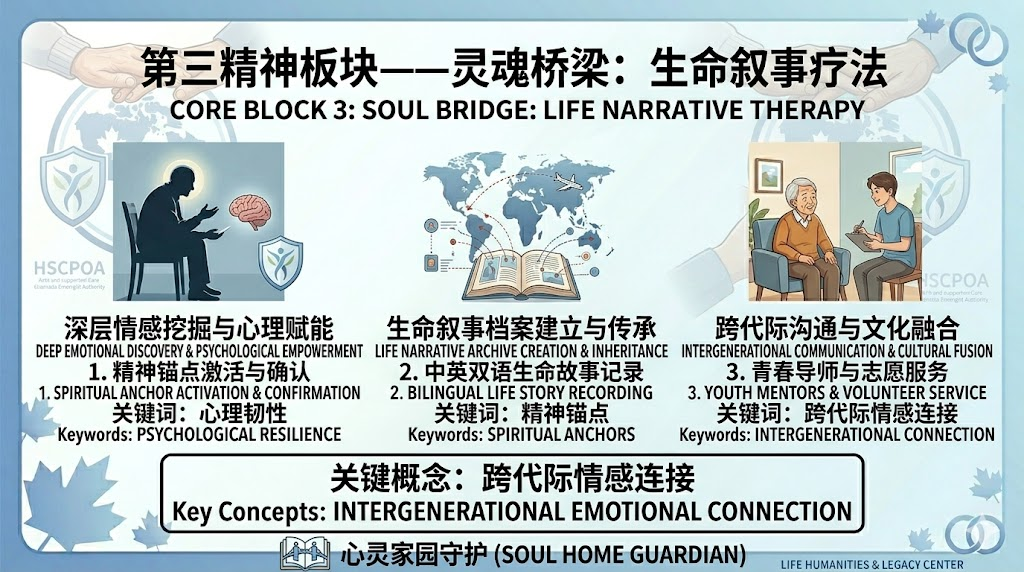
“Once their physical needs are met, what about their minds and souls? Many elderly Chinese immigrants overseas are in a state of ‘aphasia.’ In their youth, they may have been engineers, professors, or high-achieving industry elites, but in Canada, due to language barriers, they become ‘marginalized individuals’ who spend their days around the kitchen and have nothing to say to their grandchildren. This loss of self-worth is extremely devastating. To address this, we have launched ‘Life Narrative Therapy.’ We will send trained professionals or volunteers to accompany the elderly one-on-one, looking through old photos and listening to their stories of the past. We will help them compile these glories and losses into a bilingual (Chinese and English) ‘Life Archive’ or personal memoir. This not only helps the elderly find a spiritual anchor but is also the best family gift to leave for their grandchildren, building a solid bridge between the souls of two or three generations.”
📌 Page 7: Ontario’s Latest Compliance and Professional Standards (High-Frequency and Trust Endorsement)
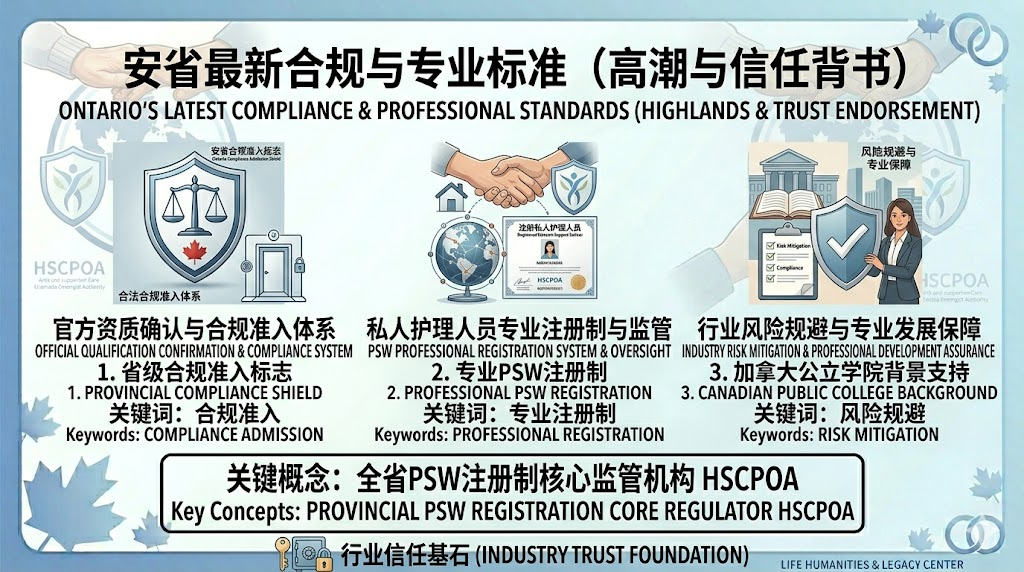
This sounds great, but how will this system be implemented in Canada? How can we ensure that our service personnel aren’t just unqualified individuals? This involves our research center’s core strength—compliance and professionalism. Please note that Ontario has officially established the HSCPOA (Health and Supported Care Professionals Association of Ontario), fully promoting the official registration system for PSWs (Private Care Workers). Unlicensed and uninsured workers in the market are not only breaking the law but also subjecting your family to enormous legal liabilities. Every frontline worker employed by our organization must be a graduate of a reputable Ontario public college like Conestoga College, be officially registered, and have adequate professional liability insurance. We use a full set of Canadian provincial and ministerial compliance standards to safeguard your family’s retirement!
📌 8: On-the-ground Project Menu – Customize your wellness plan like ordering food.
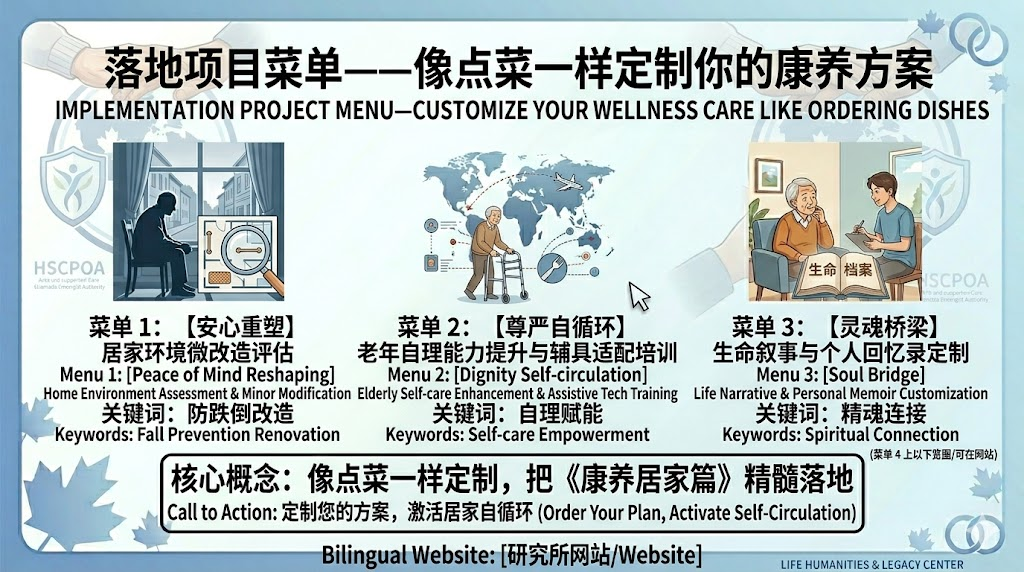
You can choose options based on your elderly family member’s specific needs, just like ordering food at a restaurant. If you’re worried about your parents slipping, choose Menu 1: [Reconstruction for Peace of Mind] Home Environment Micro-Modification Assessment; if you want your seniors to be more independent, choose Menu 2: [Dignity Self-Circulation] Assistive Device Adaptation Training; if you want to preserve your parents’ memories, choose Menu 3: [Bridge to the Soul] Customized Life Narrative and Memoirs; and even if you’re interested in entering this industry yourself, we also offer Menu 4: Comprehensive Consulting for Starting a Senior Care Organization in Ontario.
📌 9: Action Guide – Three things you can do
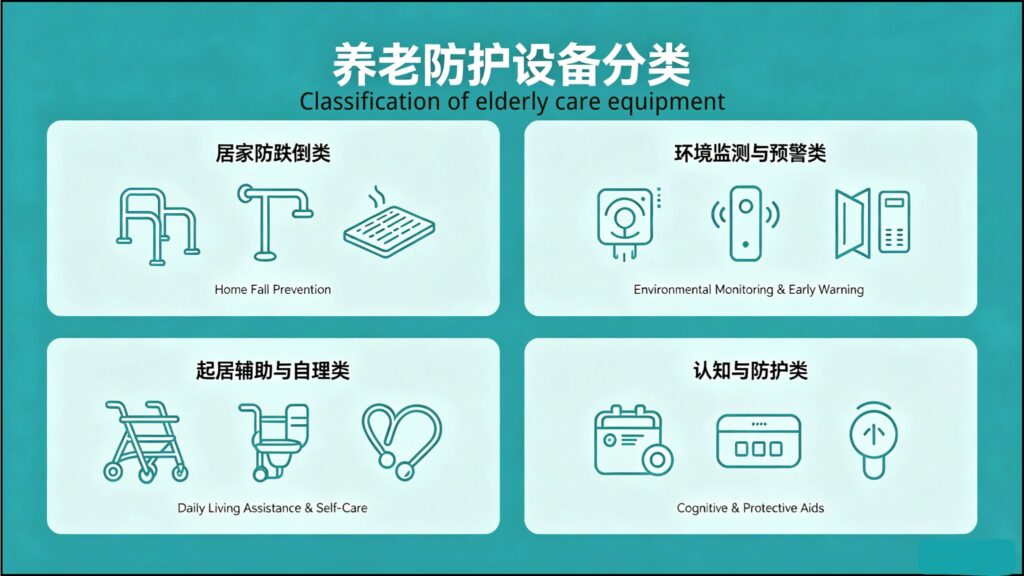
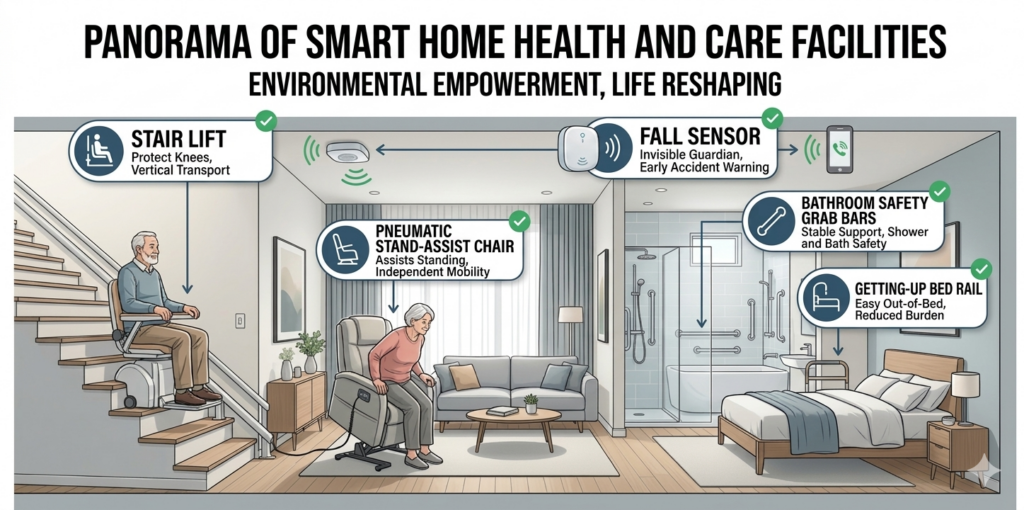
Immediate Action Guidelines: First, when you get home tonight, check your parents’ bathroom for a non-slip mat. If not, get one immediately. Second, change your communication style with your parents. Instead of saying, “Don’t move, I’ll help you,” encourage them with, “Dad/Mom, you put on your coat by yourself today! That’s great!” Third, take out your phone, scan the QR code on the screen, and follow our research center. We will continuously provide you with free technical updates and interpretations of Ontario policies.
In the modern context, intergenerational care is not a one-way sacrifice by children, but rather using science and love to help the elderly rebuild a dignified and vibrant life.